Loading…
About this offer
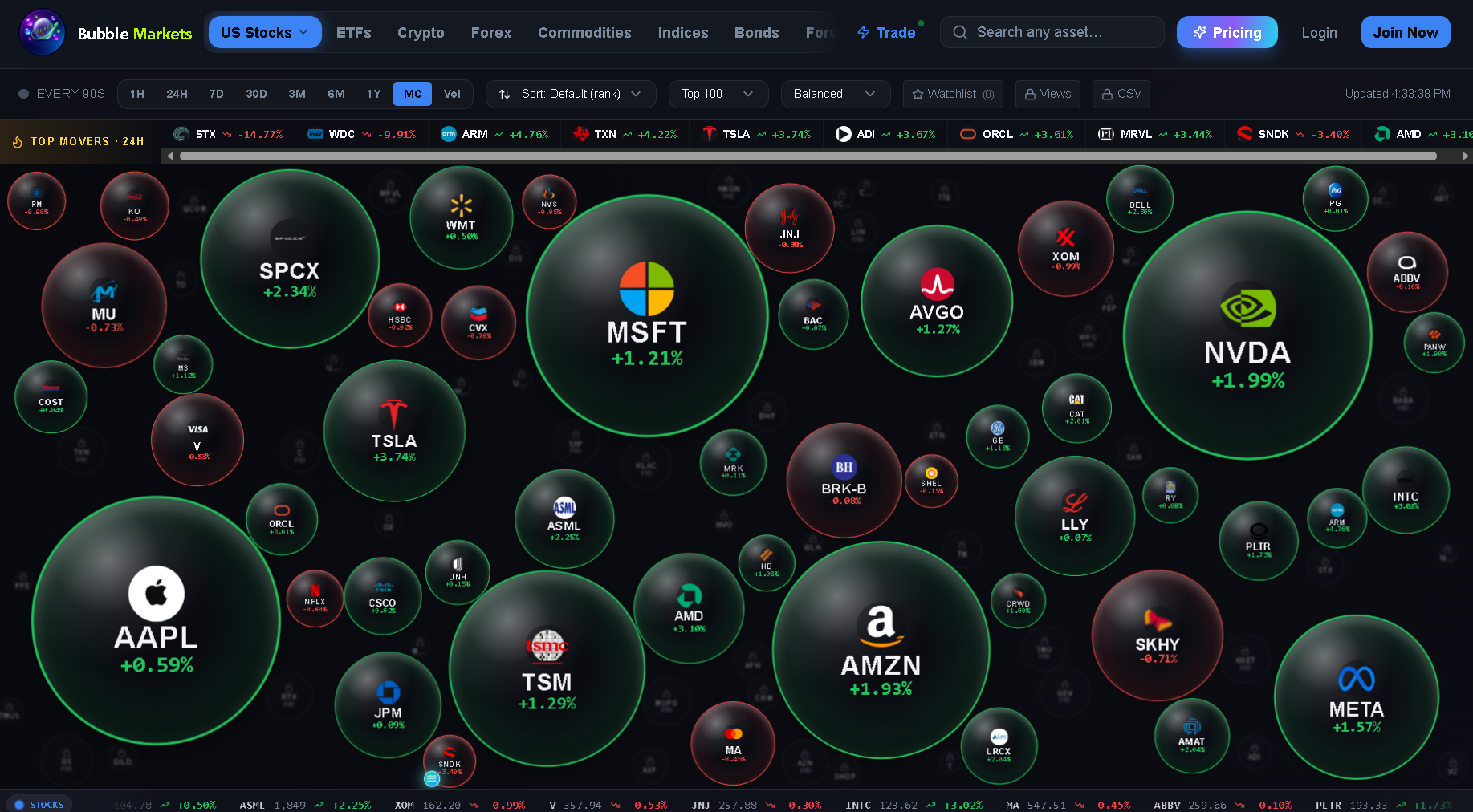
BubbleMarkets is an interactive market visualization platform that turns financial markets into live bubble maps. Each asset is represented as a bubble, with its size showing metrics such as market capitalization or trading volume, while its color shows price performance over a selected timeframe. It covers multiple asset classes including stocks, ETFs, cryptocurrencies, forex, commodities, bonds, and global indices. Users can switch between timeframes such as 1 hour, 24 hours, 7 days, 30 days, 3 months, 6 months, and 1 year to quickly identify market movements. The platform also includes features such as market screening, watchlists, portfolio tracking, price alerts, sector heat maps, AI market summaries, and a developer API.
More like this
See all in Fintech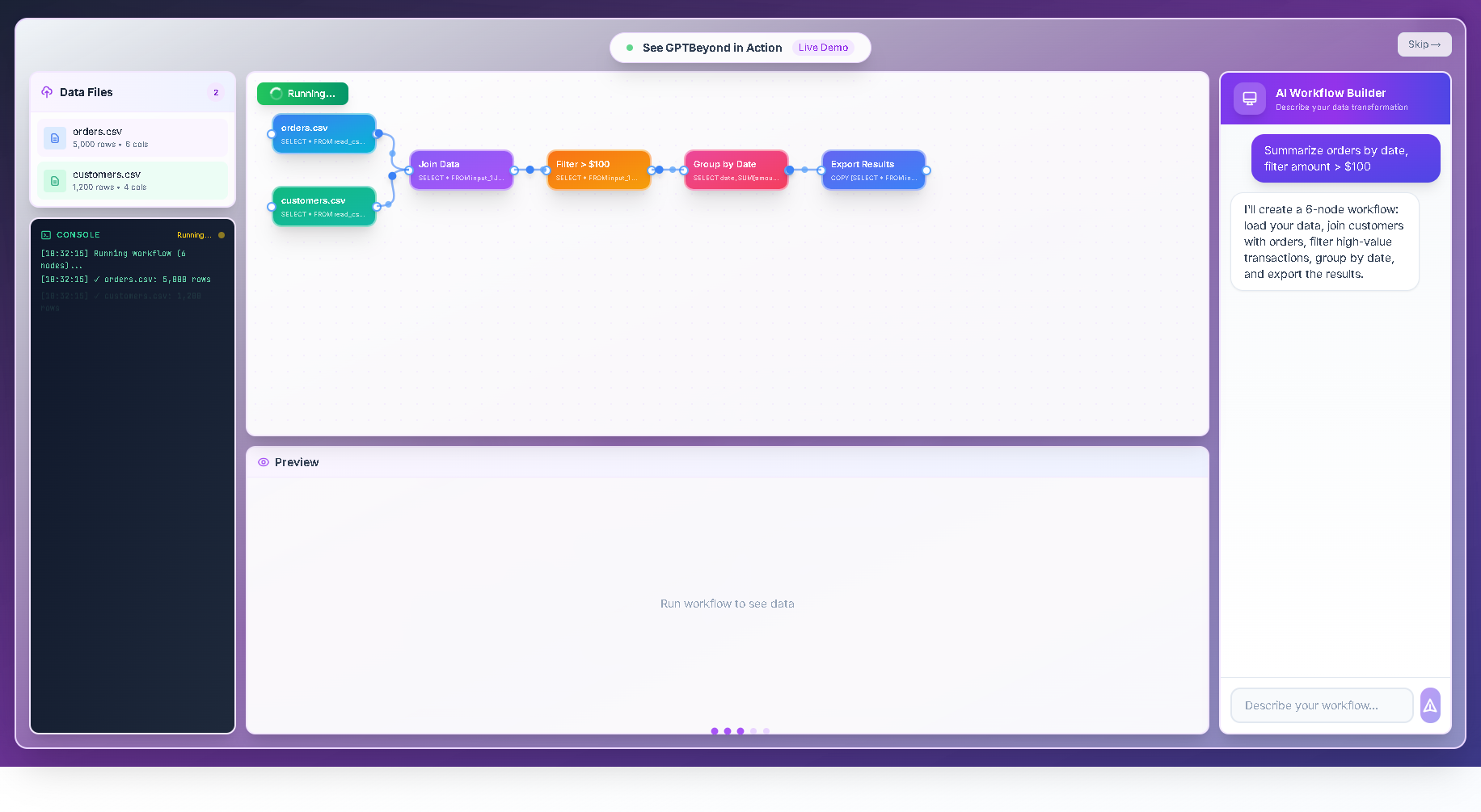
Offer4h ago
Ekselio: Build Finance Analyses by Asking in a Sentence
Ekselio turns a request in plain English into a finance analysis. Describe what you need, such as summarising orders by date for amounts over $100, and a canvas builds the workflow step by step: load the data, join, filter, group and export. Every number traces back to a step you can open and check, and your files never leave your browser.
Worldwide
MZMuhammad Zahid0 interested
Offer9h ago
UseIt: Track Credit Card Benefits Before They Expire
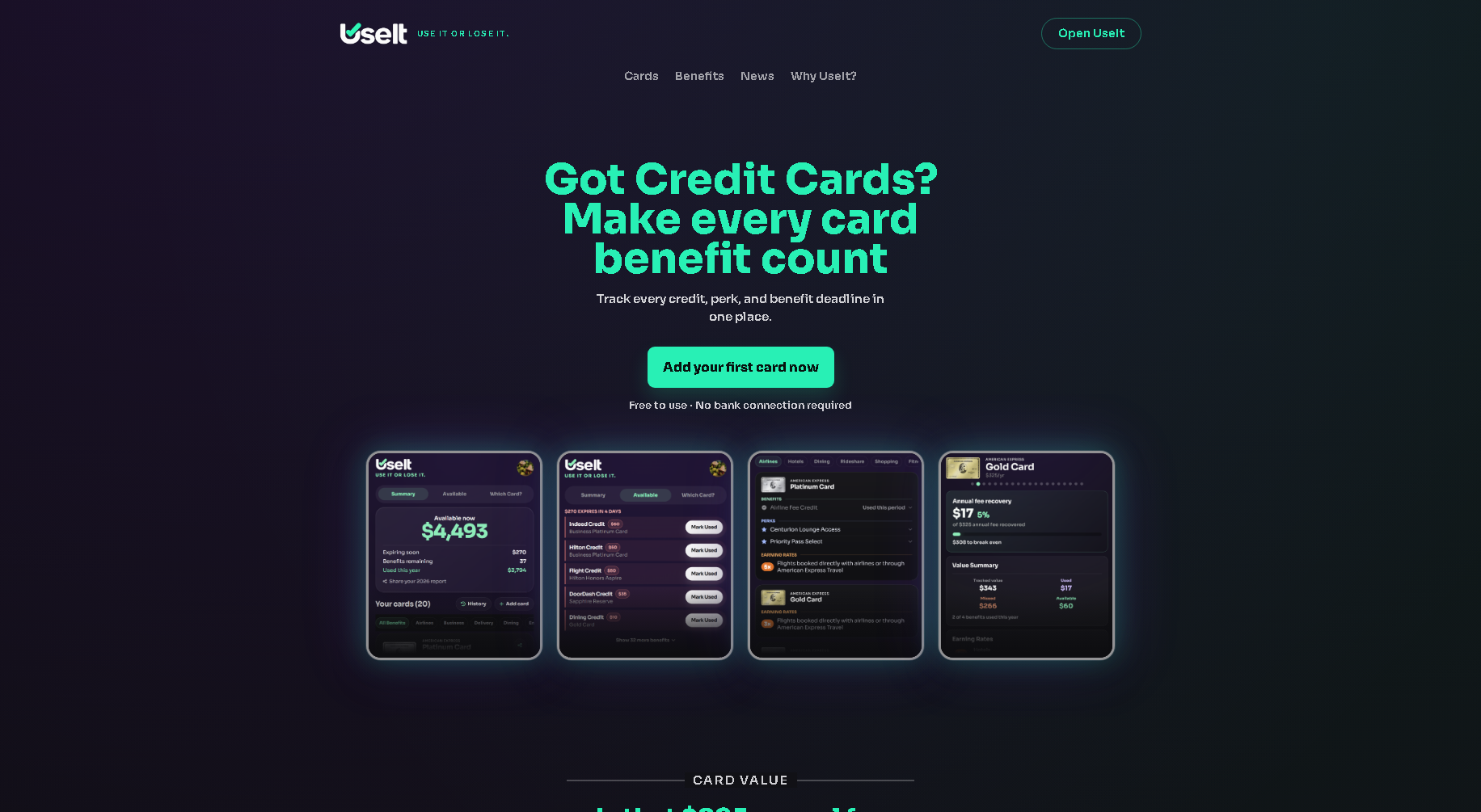
UseIt keeps all your credit card credits, perks and benefit deadlines in one place, so you use every benefit before it resets. It tracks benefits whether they renew monthly, quarterly or annually and shows which ones are about to expire. It also tracks the value you get from each card, so you can tell whether an annual fee is paying for itself, and keeps a history of what you used and what you missed. It is free to use and needs no bank connection.
Worldwide
MZMuhammad ZahidFree
Offer9h ago
TickerRisk: Hidden Risk Scanner for Options Traders
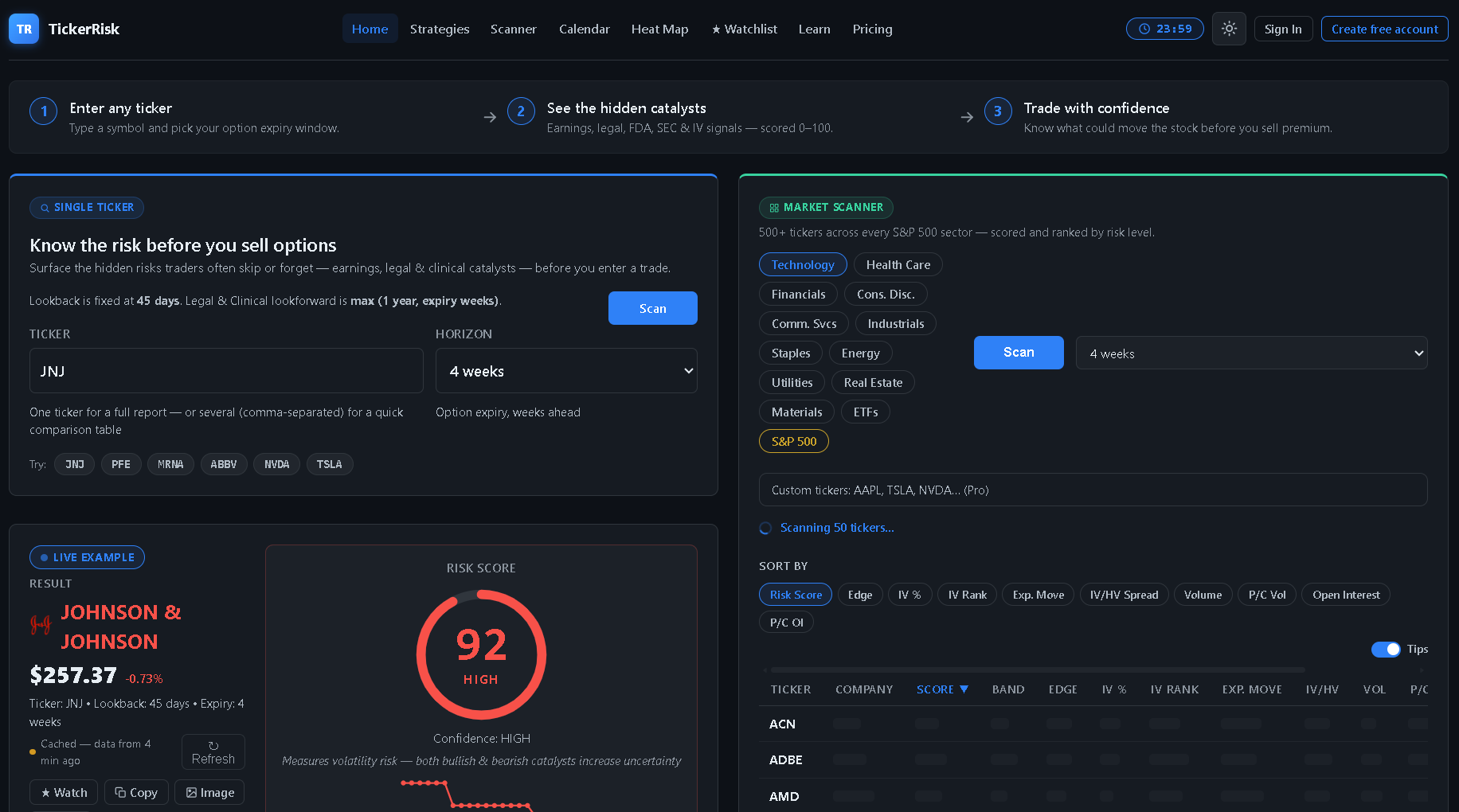
TickerRisk is a web-based options research tool designed primarily for options premium sellers. It scans stocks for hidden catalysts and risks that could affect an options position before its expiration date. Users enter a ticker and their intended option expiry window. TickerRisk analyzes factors such as earnings, FDA and clinical events, legal developments, SEC activity, implied volatility, options signals, and company fundamentals, then produces a 0 to 100 risk score and catalyst timeline. It also provides market-wide scanners for cash-secured puts, covered calls, and wheel strategies, helping traders identify options with attractive premiums while filtering for catalyst exposure within the selected expiry window.
Worldwide
MZMuhammad Zahid0 interested
Offer9h ago
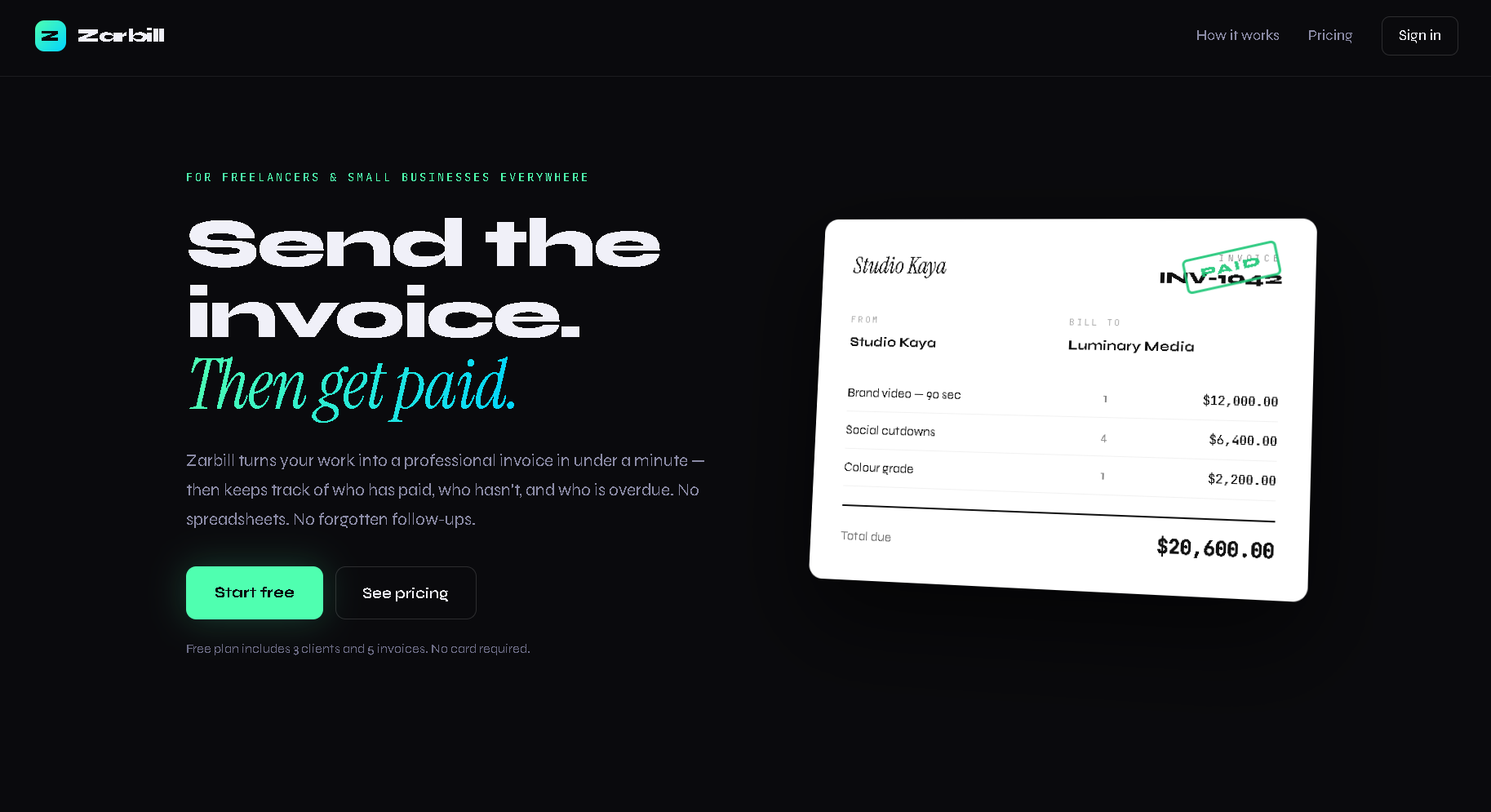
Zarbill: Simple Invoicing for Freelancers and Small Studios
Zarbill is an invoicing tool designed for freelancers, independent professionals, and small creative studios. It helps users create and manage professional invoices without the complexity of larger accounting platforms. Users can create invoices, manage clients and billing information, track invoice status, and handle recurring billing-related tasks from a simple interface.
Worldwide
MZMuhammad Zahid0 interested
Offer10h ago
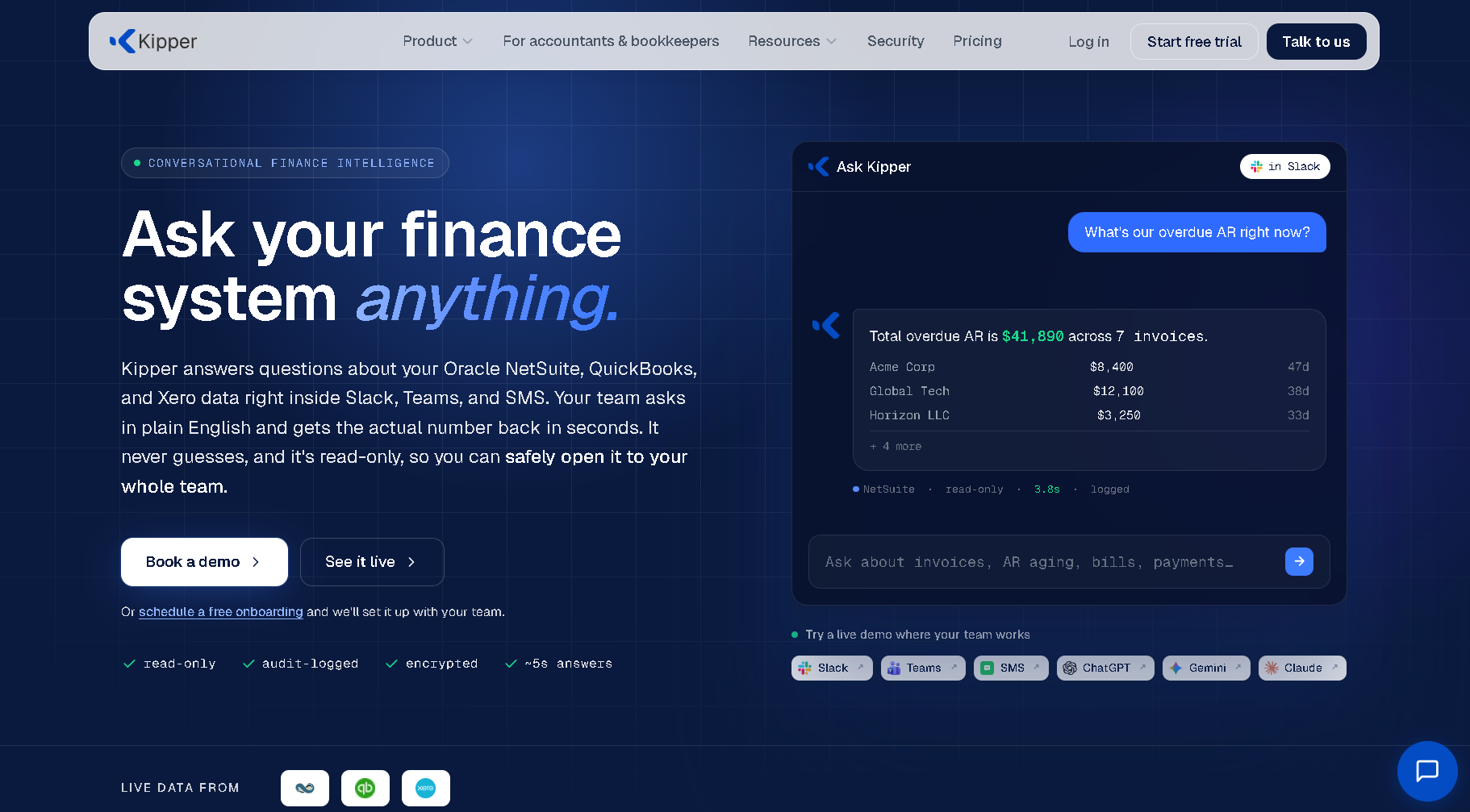
Kipper - AI Assistant for Finance Systems
Kipper lets employees ask questions about company financial data in plain English instead of manually navigating accounting software or asking the finance team. It connects to QuickBooks, Xero, and Oracle NetSuite and can answer questions about invoices, payments, accounts receivable, bills, purchase orders, inventory, customers, and other financial data. Users can ask questions through Slack, Microsoft Teams, SMS, or AI assistants such as ChatGPT, Claude, and Gemini via MCP. Kipper translates questions into SQL queries against the finance data and returns the actual figures rather than relying on document search or RAG. It is read-only, with administrator-controlled permissions and audit logging, so employees can access financial information without needing direct access to the underlying accounting system
Worldwide
MZMuhammad Zahid0 interested
Building15h ago
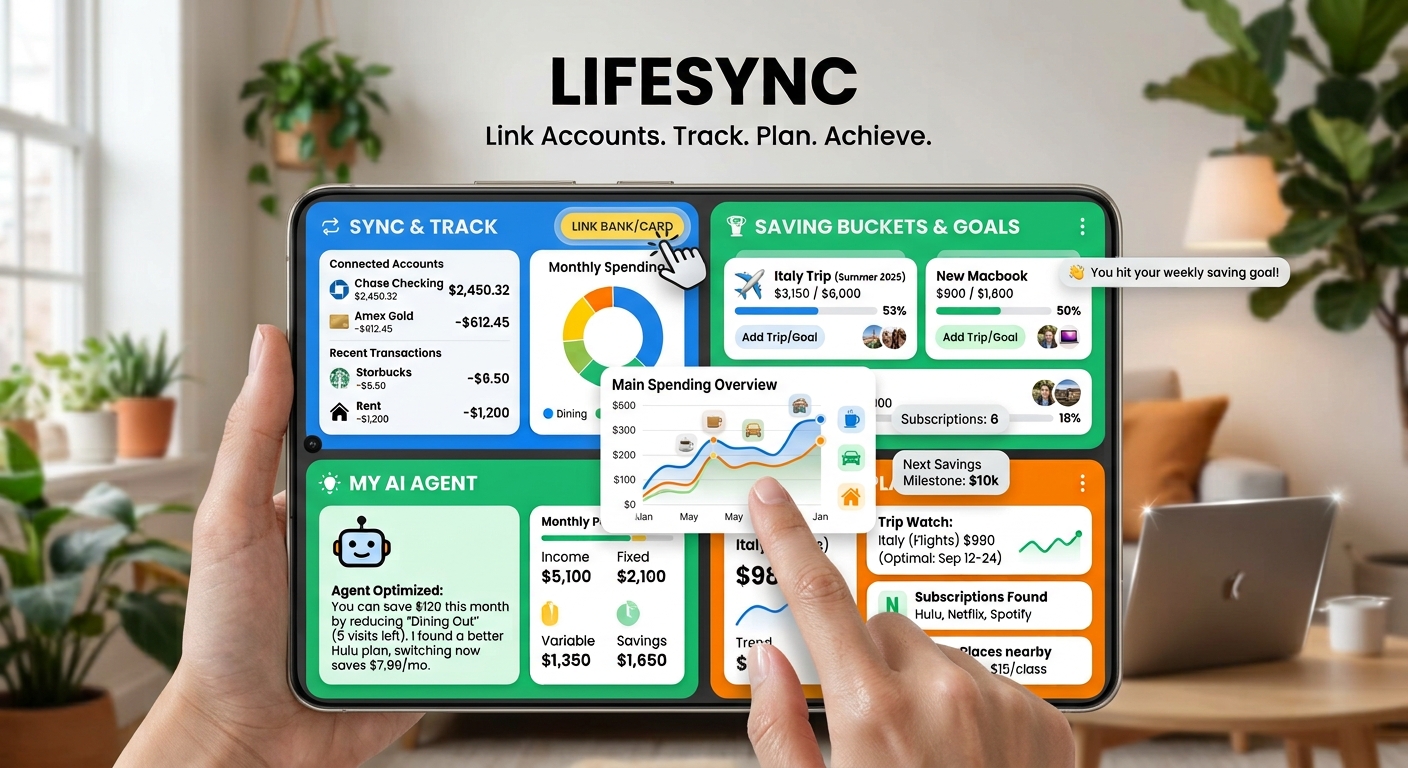
A personal finance agent that turns your income and spending into actionable plans for reaching your travel, lifestyle,
Most budgeting apps show people where their money went, but don't help them connect their everyday spending to the things they actually want to do. Planning a trip, starting a hobby, or reaching a savings goal often means manually estimating costs, creating separate savings plans, tracking subscriptions, and adjusting spending. The app connects bank accounts and cards to understand income, spending, and fixed expenses. Users can add goals such as trips, purchases, hobbies, or experiences, and the app creates savings buckets and plans to help them reach those goals. An AI agent can recommend spending adjustments, identify recurring subscriptions and expenses, monitor relevant prices, and continuously suggest ways to reach goals faster. The target users are people who want to enjoy their lifestyle while being more intentional with their money, particularly people saving for travel, hobbies, major purchases, and experiences. I want to learn whether people want financial planning to be organized around their life goals rather than traditional budgeting, which goals they would use it for, and how much automation they would trust an AI agent with.
Worldwide
MZMuhammad Zahid0 on the waitlist